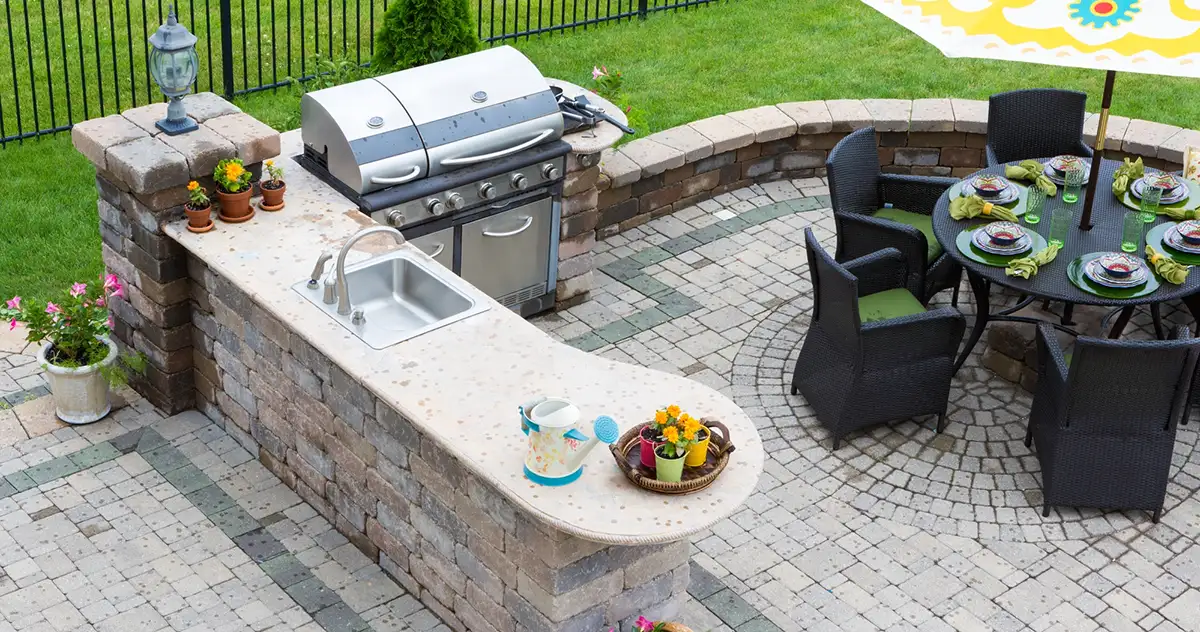
If you love to cook or have gatherings, you need an outdoor kitchen in your backyard. Not only do outdoor kitchens look great, but they also add real functionality to your backyard while adding value to your home. The big shift this year: outdoor kitchens have stopped being a grill with a countertop attached. They’re being built like real kitchens — multiple cooking stations, covered seating, and cabinetry designed to survive the weather. If you’re ready to build your own, here are the top 11 outdoor kitchen design trends we’re seeing.
These are the top 11 outdoor kitchen design trends in 2026:
1. Modular Kits
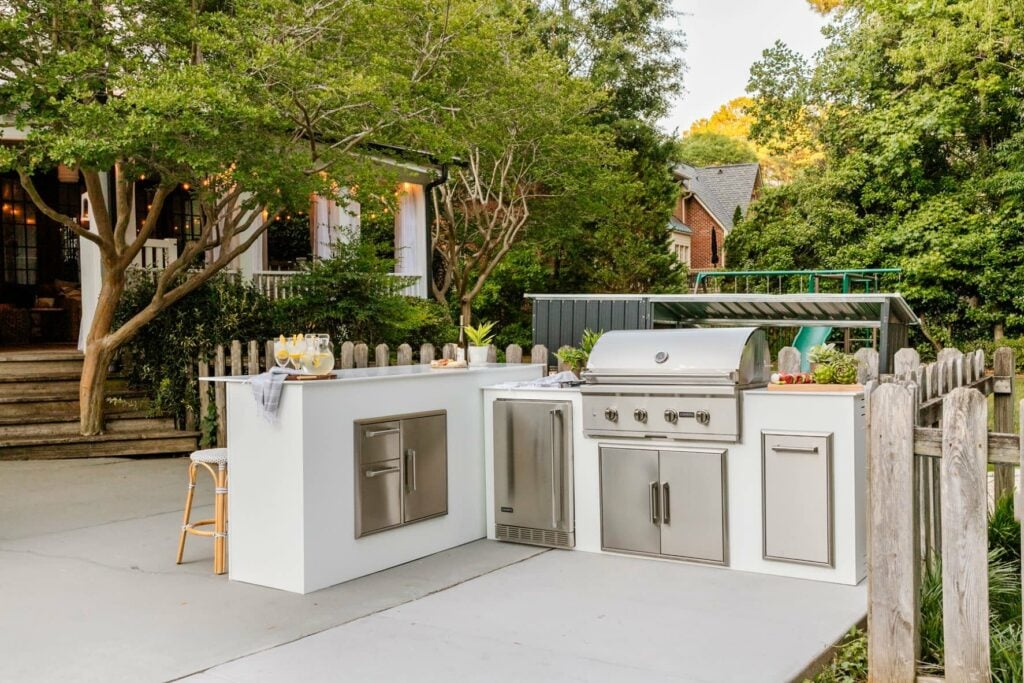
Modular is still the entry point for most homeowners, and it’s gotten a lot better. Concrete and marine-grade polymer kits now ship as components that lock together, so you get a functional cooking space without a full masonry build. The real advantage is that you can start with a grill and two cabinet runs, then add a bar section or a second cooking zone next season. Your layout isn’t locked in on day one.
2. Multiple Cooking Zones
(Bob Vila)
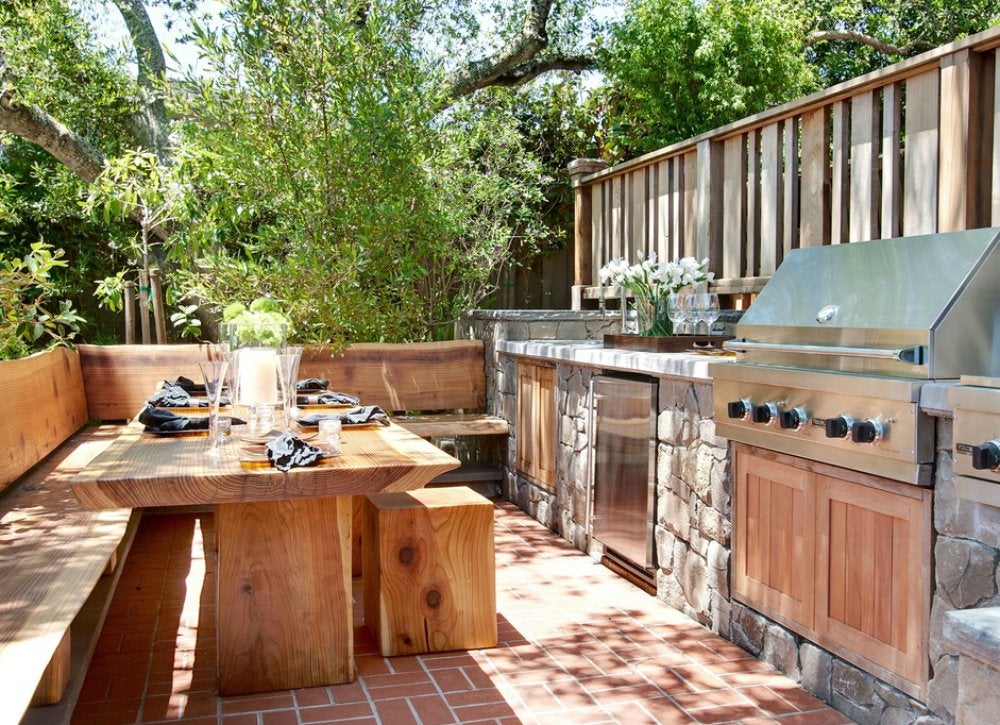
The single-grill outdoor kitchen is on its way out. The layouts we’re building now have two or three dedicated stations — a grill for steaks and burgers, a flat-top griddle for breakfast and smash burgers, and often a smoker or pizza oven. It changes how the space gets used. Two people can cook at once instead of taking turns, and you can run a full meal outside instead of shuttling half of it in from the indoor range.
3. Pizza Ovens
Pizza ovens moved from novelty to standard equipment. Countertop models start around a few hundred dollars, and built-in versions can be framed directly into your island so they read as part of the kitchen rather than an appliance parked on the counter. They’re also the most social piece of equipment you can install — pizzas cook in about 90 seconds, so guests end up gathered around watching instead of waiting on a 40-minute cook.
4. Beverage Centers
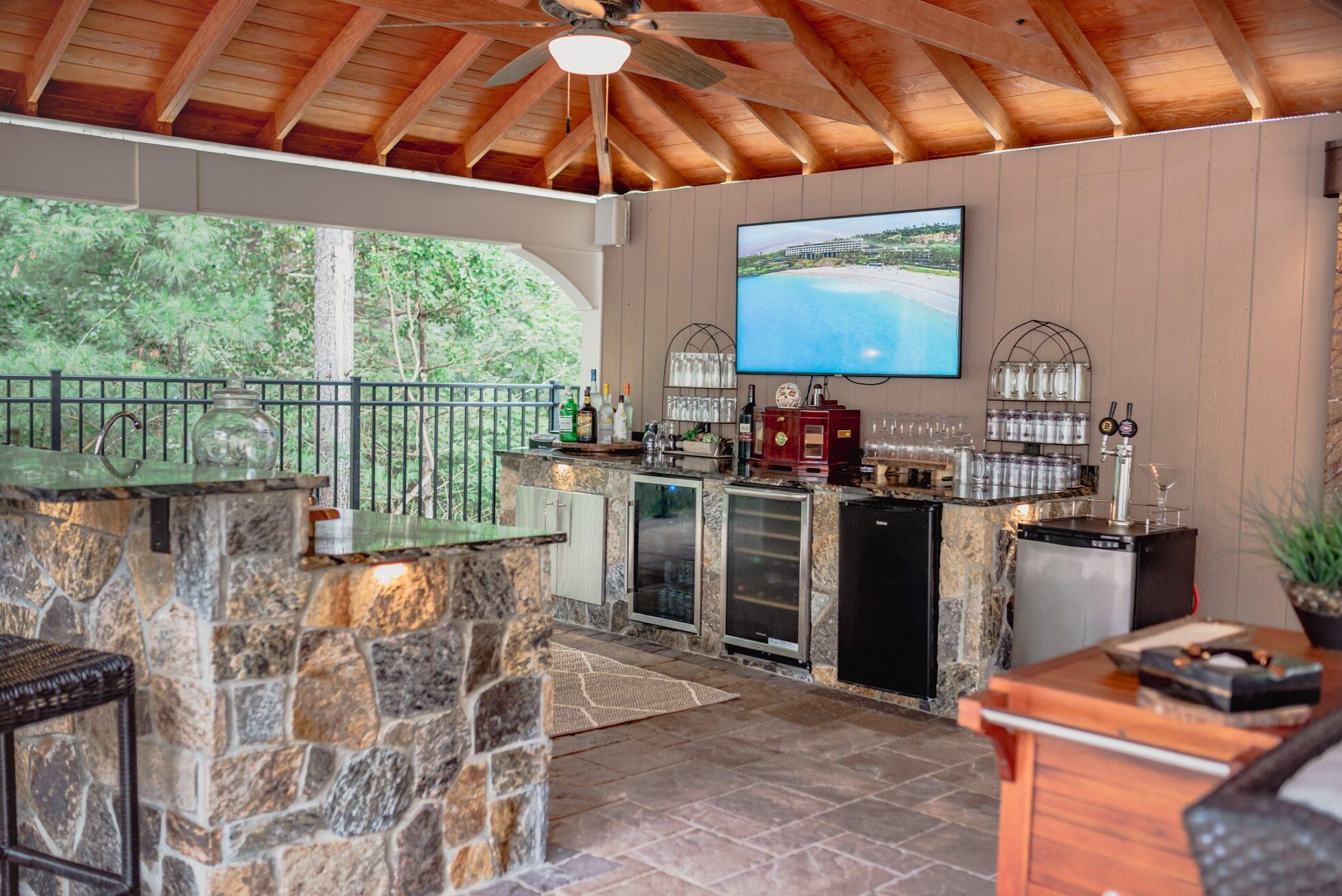
The outdoor bar has grown up into a full beverage station: undercounter refrigeration, an ice maker, wine storage, sometimes a kegerator. The point is that the host stops disappearing into the house every ten minutes. If you have a pool, it’s even more useful — nobody has to dry off and track water through the kitchen to get a drink.
5. Pergolas and Covered Kitchens
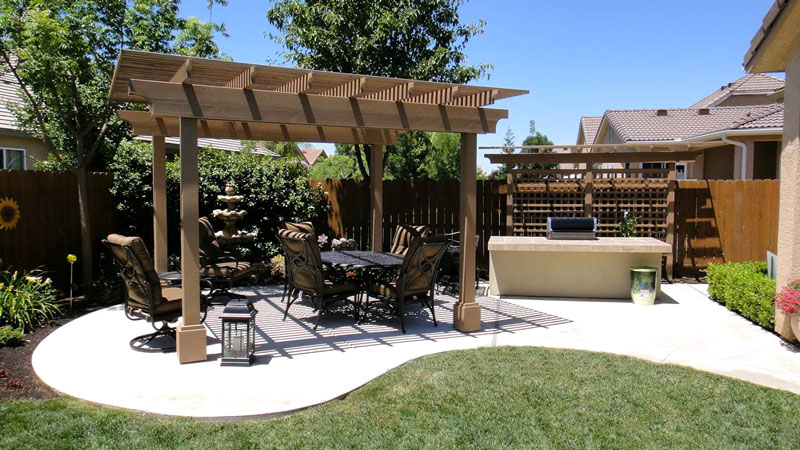
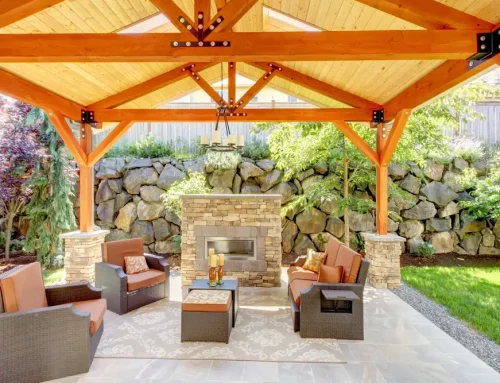
This is the trend with the biggest practical payoff. An uncovered outdoor kitchen gets used when the weather cooperates; a covered one gets used most of the year. Pergolas are the popular middle ground — they give you shade over the cooking and seating areas without closing the space in, and louvered versions let you adjust for sun angle or shut out light rain. Add a patio heater and the season extends further still.
6. Warm, Earthy Color Palettes
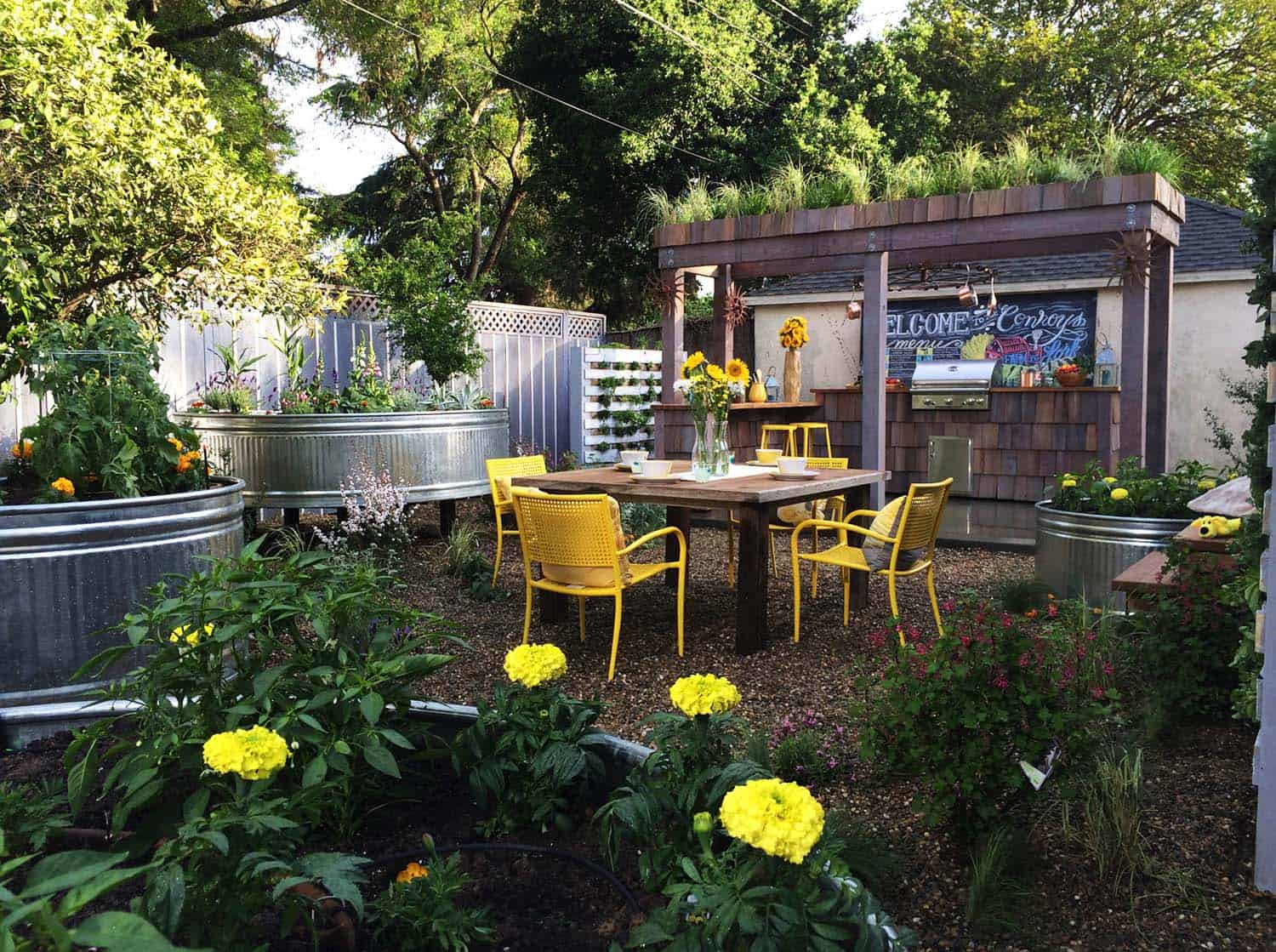
Cool grays and stark whites are giving way to warmer, grounded colors — sage and olive greens, taupe and mushroom, terracotta, and natural wood tones. Pantone’s 2026 Color of the Year, Cloud Dancer, is a soft warm neutral, which tells you where the whole palette is headed. Outdoors this works especially well, because earth tones sit naturally against planting and greenery instead of fighting it.
7. Stone and Porcelain Surfaces
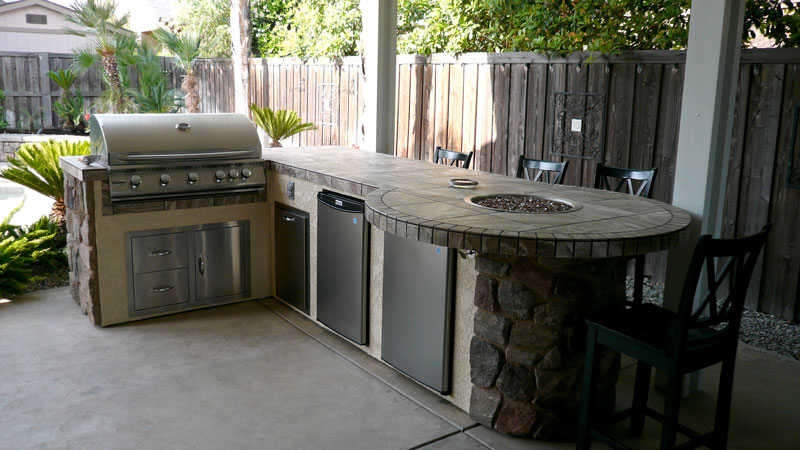
Stone is still the durability standard, and porcelain slab has become the countertop of choice alongside it. Porcelain doesn’t fade in UV, doesn’t stain, and handles freeze-thaw without sealing — which is the practical problem with a lot of natural stone outdoors. Both give you the textured, natural look that fits the warmer palettes above, and both will outlast almost everything else in the yard.
8. Seamless Indoor-Outdoor Flow
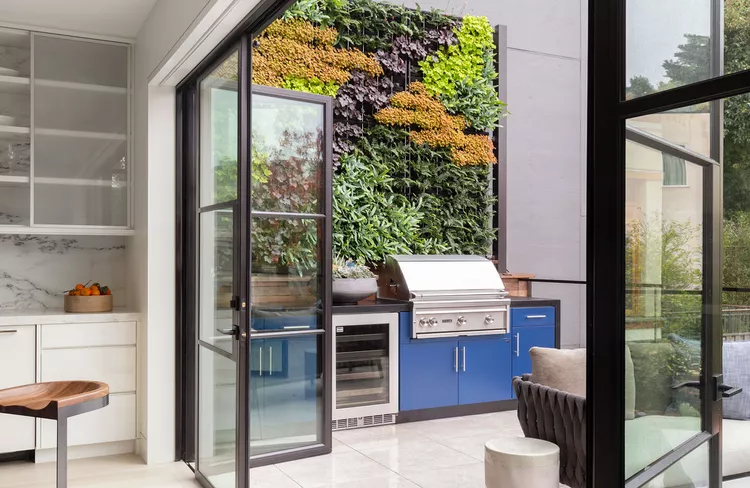
Matching your outdoor kitchen to your interior — same cabinet color family, same countertop tone, same flooring run through a large slider — makes the backyard read as another room instead of a separate zone. It’s a design decision, but it has a functional effect too: spaces that feel like part of the house get used like part of the house.
9. Smart Kitchens
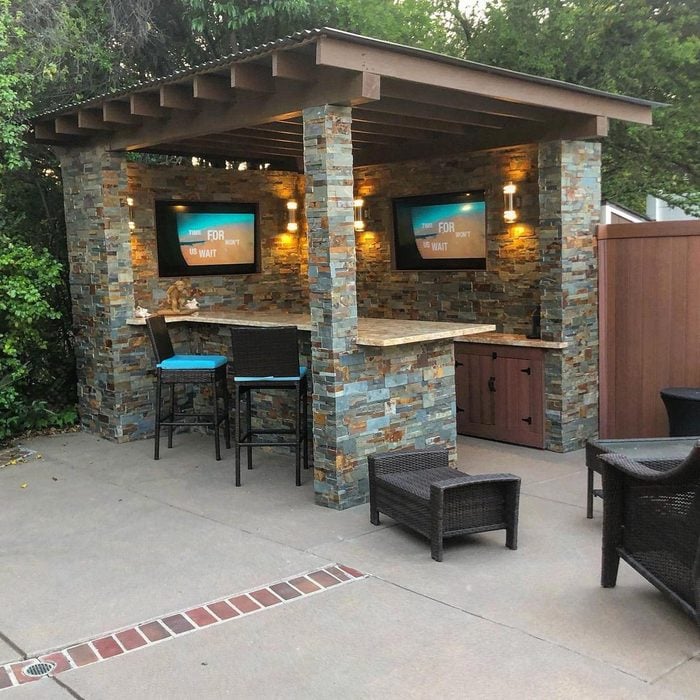
App-controlled smokers that hold temperature overnight, wireless probe thermometers, weatherproof speakers, and layered outdoor lighting you can dim from your phone. Lighting is the one we’d prioritize — most outdoor kitchens are used after dark at least half the time, and a space you can’t see in is a space you stop using in October.
10. Weatherproof Cabinetry
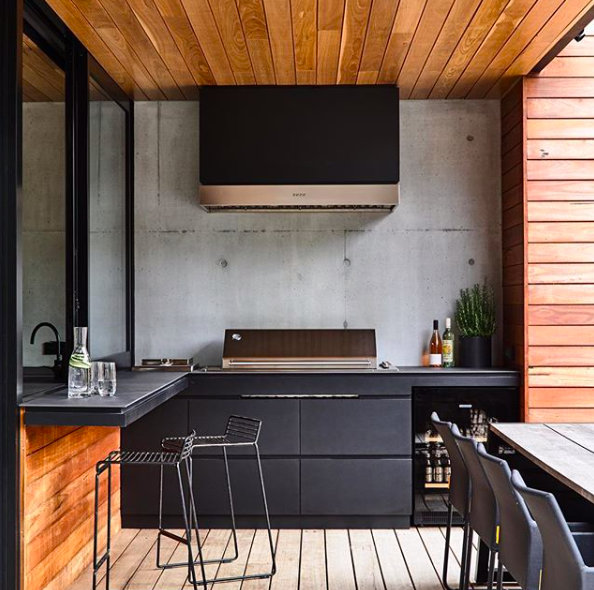
(Acre)
Cabinetry is where outdoor kitchens quietly fail, and 2026’s designs take it seriously. The materials that hold up are 304 stainless steel (316 if you’re near saltwater), marine-grade HDPE polymer, powder-coated aluminum, or masonry. Standard indoor cabinets will not survive outside, and wood boxes only work under full cover. Check the hardware too — good cabinets with cheap hinges still fail in a couple of seasons.
11. Sociable Islands
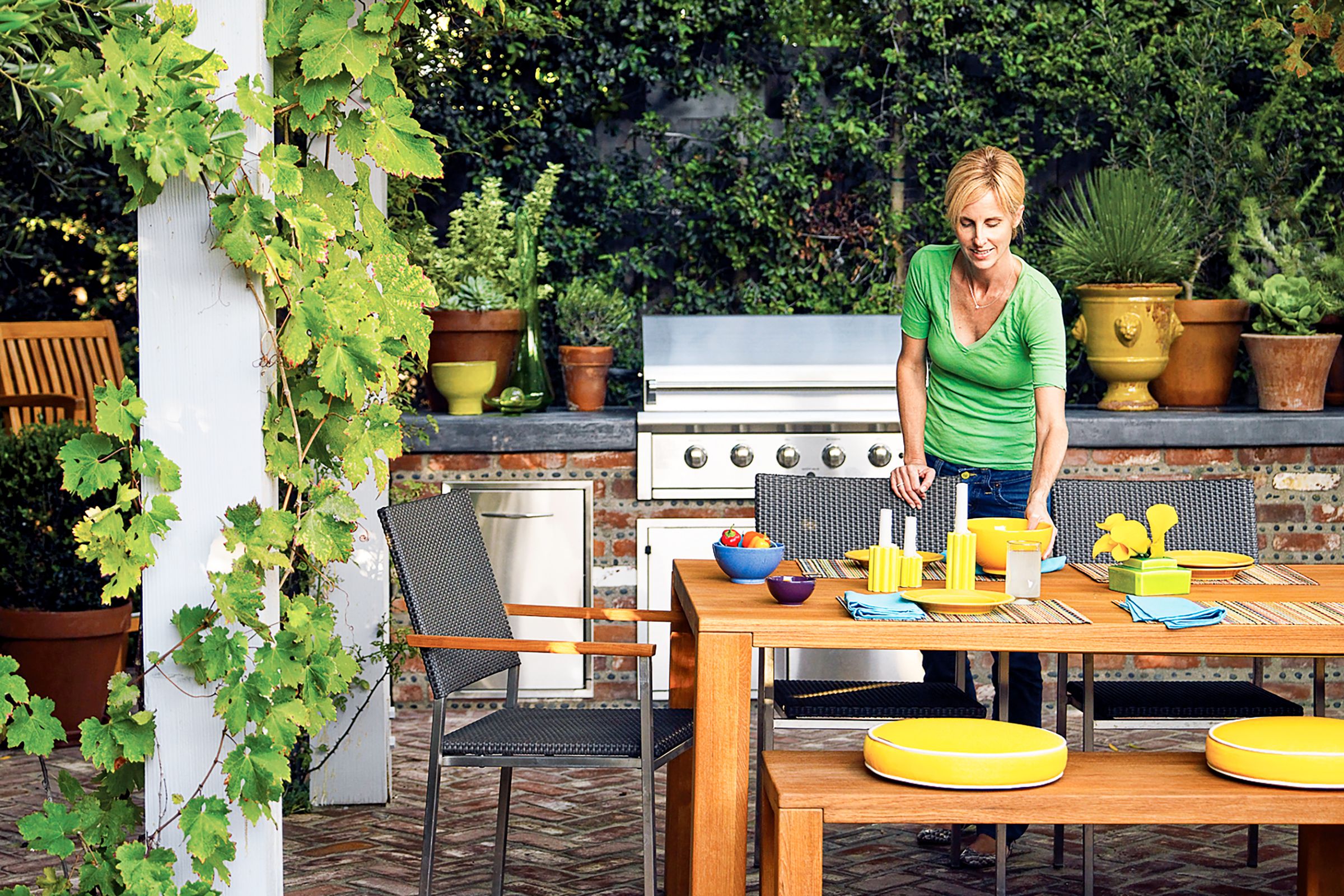
The island is being designed around the guests rather than the cook. That means a raised bar edge with stools on the far side, prep space positioned so the cook faces the group instead of a fence, and enough counter run that food, drinks, and elbows aren’t competing. If you have kids or host large groups, this is the layout decision that matters most.
Ready to Design Your Outdoor Kitchen?
If you’re ready for your own outdoor kitchen, contact Mike’s Evergreen! We’ll help you design your dream kitchen and bring your vision to life.