If you’re planning a new landscape or updating an existing yard, choosing the right plants is one of the most important decisions you’ll make. While many ornamental plants can survive in California’s Central Valley, California native plants for landscaping offer significant advantages for homeowners in Fresno and Clovis.
Native plants have adapted over thousands of years to California’s climate, making them naturally resilient to drought, heat, and many local pests. They typically require less water, less fertilizer, and less maintenance than non-native species, all while supporting local pollinators and wildlife.
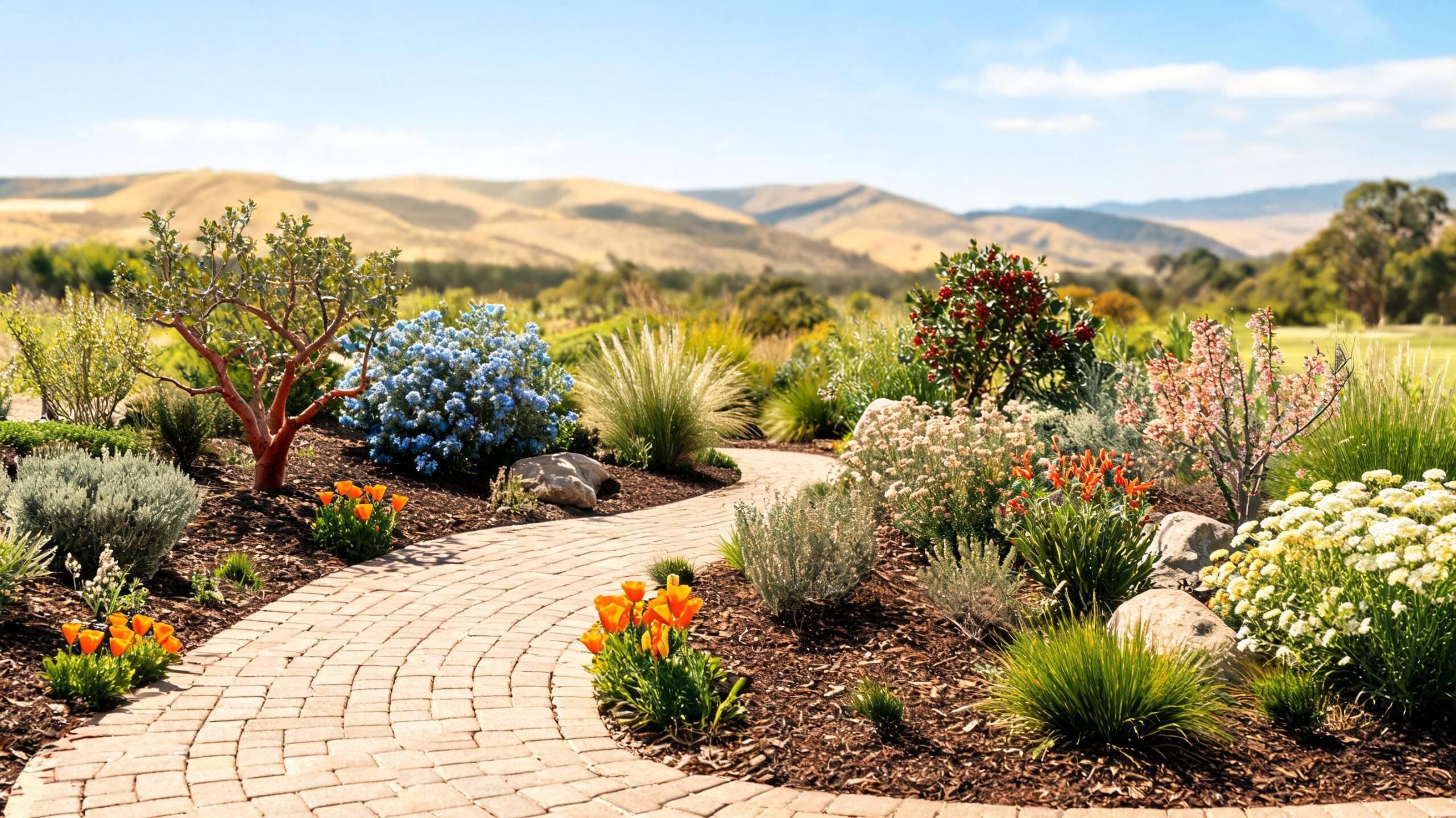
Whether you’re creating a modern landscape, a colorful garden, or a water-wise outdoor space, these ten native plants are excellent choices for your Fresno landscape.
Why Choose California Native Plants?
California’s Central Valley presents unique landscaping challenges. Hot, dry summers and periods of drought mean homeowners need plants that can withstand extreme conditions without requiring constant irrigation.
Choosing low maintenance plants in Fresno offers several benefits:
- Lower water bills
- Reduced landscape maintenance
- Better drought tolerance
- Fewer pest problems
- Improved long-term plant health
- Support for local birds, butterflies, and pollinators
- Beautiful year-round color and texture
When paired with efficient irrigation, mulch, and thoughtful landscape design, native plants help create sustainable landscapes that remain attractive throughout the seasons.
1. California Lilac (Ceanothus)
One of California’s most recognizable native shrubs, California Lilac produces stunning clusters of vibrant blue flowers each spring.
Why homeowners love it:
- Drought tolerant once established
- Attracts bees and butterflies
- Evergreen varieties provide year-round color
- Requires very little supplemental watering
California Lilac works beautifully as a privacy hedge, accent shrub, or foundation planting.
2. Manzanita
Known for its twisting branches, smooth reddish bark, and attractive evergreen foliage, Manzanita adds architectural interest to any landscape.
Its small bell-shaped flowers bloom during winter and early spring, providing an important food source for pollinators.
Benefits include:
- Extremely drought tolerant
- Minimal pruning required
- Naturally resistant to many pests
- Excellent for slopes and hillsides
Many varieties remain compact, making them ideal for residential landscapes throughout Fresno and Clovis.
3. California Fuchsia
If you’re looking for bold color, California Fuchsia delivers vibrant orange-red blooms during late summer and fall.
Unlike many flowering plants that struggle in extreme heat, this native perennial actually thrives when temperatures rise.
It’s also a favorite of hummingbirds.
Best uses:
- Borders
- Rock gardens
- Pollinator gardens
- Water-wise landscapes
4. Deer Grass
Deer Grass is an ornamental native grass that adds movement and texture to your landscape.
Its graceful flower stalks can reach several feet tall while requiring very little maintenance.
Why it’s popular:
- Heat tolerant
- Low water requirements
- Provides year-round interest
- Helps soften hardscape features like patios and walkways
5. Toyon
Sometimes called the California Holly, Toyon is famous for its bright red berries that appear during fall and winter.
The berries provide food for birds while adding seasonal interest to the landscape.
Toyon works well as:
- A privacy screen
- A large shrub
- A natural hedge
- A wildlife-friendly planting
6. Cleveland Sage
If fragrance is important to you, Cleveland Sage is hard to beat.
Its aromatic gray-green foliage and lavender blooms create an inviting landscape while attracting bees and butterflies.
Benefits include:
- Very drought tolerant
- Naturally deer resistant
- Low maintenance
- Long blooming season
It pairs beautifully with decorative boulders and natural stone hardscaping.
7. California Buckwheat
California Buckwheat offers months of visual interest.
Its delicate white flowers gradually mature into rusty bronze seed heads that provide texture long after blooming ends.
It’s also one of the best native plants for supporting beneficial insects.
Ideal for:
- Dry slopes
- Native gardens
- Pollinator habitats
- Natural landscapes
8. Western Redbud
For homeowners wanting a small ornamental tree, Western Redbud is an excellent choice.
Early each spring, brilliant pink flowers cover its branches before the leaves emerge.
Throughout the year, its heart-shaped leaves provide soft texture and seasonal color.
Western Redbud works well as:
- A specimen tree
- Patio shade
- Accent planting
- Front yard focal point
9. California Poppy
As California’s state flower, the California Poppy is one of the easiest native plants to grow.
Its cheerful orange blooms brighten landscapes throughout spring and often reappear with favorable weather.
Advantages include:
- Extremely low maintenance
- Thrives in poor soil
- Self-seeds naturally
- Requires minimal watering
Plant them in masses for the greatest visual impact.
10. Yarrow
Yarrow is an incredibly versatile perennial that performs well in Fresno’s climate.
Available in white, yellow, pink, and other colors, it blooms for months while attracting butterflies and beneficial insects.
Yarrow is perfect for:
- Cottage gardens
- Pollinator gardens
- Borders
- Water-efficient landscapes
Once established, it requires very little care.
Designing a Landscape with Native Plants
The most beautiful landscapes combine different plant heights, textures, and bloom times to create year-round interest.
A professional landscape designer may combine:
- Flowering shrubs
- Ornamental grasses
- Native trees
- Groundcovers
- Perennials
- Decorative rock
- Mulch
- Custom hardscape features
The result is a landscape that’s visually balanced while remaining easy to maintain.
Pair Native Plants with Smart Hardscaping
Native plants become even more effective when incorporated into a complete landscape design.
Features like paver walkways, retaining walls, decorative boulders, patios, and dry creek beds complement native gardens while reducing lawn space and water use.
Together, these elements create outdoor spaces that are both beautiful and functional.
Water-Wise Doesn’t Mean Boring
One of the biggest misconceptions about drought-tolerant landscaping is that it lacks color or variety.
In reality, California native plants offer:
- Vibrant seasonal blooms
- Evergreen foliage
- Unique bark textures
- Colorful berries
- Dramatic grasses
- Architectural shrubs
- Year-round visual interest
When thoughtfully arranged, native landscapes can be just as lush and inviting as traditional gardens—while requiring significantly less maintenance.
Professional Landscape Design Makes the Difference
Selecting the right plants is only part of creating a successful landscape.
Proper spacing, irrigation planning, grading, soil preparation, and seasonal color all contribute to long-term success.
A professional landscape designer understands which California native plants for landscaping perform best in Fresno and Clovis and how to combine them into a cohesive outdoor space that complements your home.
Whether you’re redesigning your front yard, creating a backyard retreat, or replacing a high-maintenance lawn with a water-wise landscape, professional planning helps ensure lasting beauty and healthy plant growth.
Frequently Asked Questions
Are California native plants drought tolerant?
Yes. Most California native plants are naturally adapted to the state’s dry climate and require significantly less water once established than many non-native landscape plants.
Do native plants require less maintenance?
Generally, yes. Many native plants need less pruning, fertilizer, and irrigation while also showing greater resistance to local pests and diseases.
Can native plants create a colorful landscape?
Absolutely. Plants like California Lilac, California Fuchsia, California Poppy, and Western Redbud provide vibrant blooms throughout different seasons of the year.
Are native plants good for pollinators?
Yes. Many native plants attract bees, butterflies, hummingbirds, and other beneficial pollinators that support healthy ecosystems.
Can native plants be mixed with traditional landscape plants?
Yes. Many homeowners choose a combination of native and ornamental plants to achieve their desired aesthetic while still improving water efficiency.
When is the best time to plant native plants in Fresno?
Fall is often the ideal time to plant California natives. Cooler temperatures and winter rains help establish strong root systems before the heat of summer arrives.
Transform Your Landscape with Plants That Belong Here
If you’re looking for a landscape that’s beautiful, sustainable, and easy to maintain, California native plants for landscaping are an excellent choice. By incorporating low maintenance plants in Fresno into your landscape design, you can enjoy year-round beauty while reducing water use and ongoing upkeep.
At Mike’s Evergreen, we specialize in designing landscapes that are both functional and beautiful, using plant selections that thrive in the Central Valley climate. Whether you’re planning a complete landscape renovation or simply want to refresh your yard with drought-tolerant plants, our experienced team can help bring your vision to life.
Contact Mike’s Evergreen today to schedule a consultation and discover how a professionally designed landscape featuring California native plants can enhance your Fresno or Clovis home.